
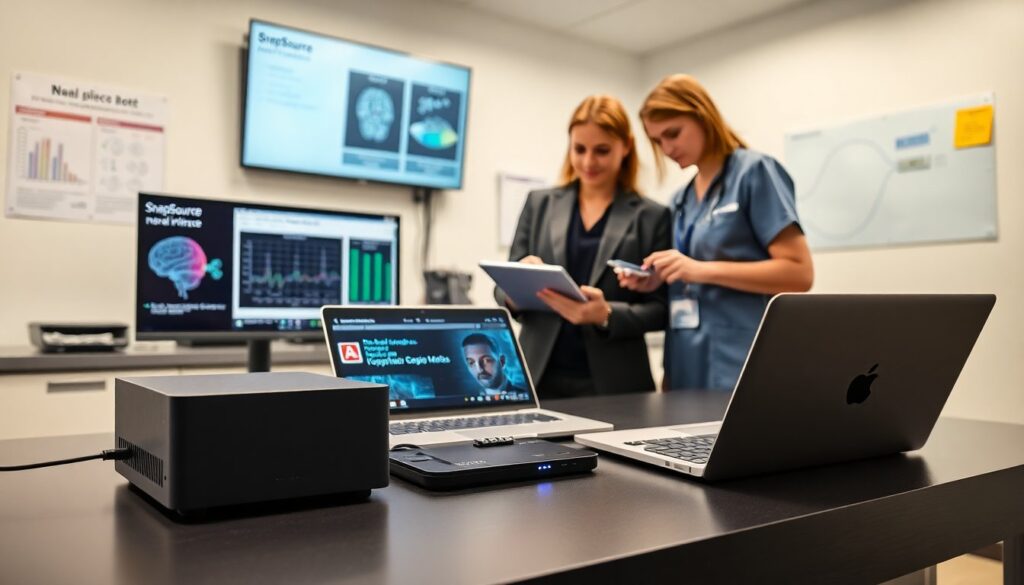
SnapSource neural interface edge describes a compact system that runs brain–computer models on local devices. It reduces latency and preserves user data on-device. It lets teams process neural signals without sending raw data to the cloud. This guide explains what the SnapSource neural interface edge does, how it works, where teams use it, and what practitioners should plan for.
Key Takeaways
- SnapSource neural interface edge enables fast, local brain–computer interaction by running optimized models directly on devices, reducing latency and keeping sensitive data private.
- Its architecture separates sensing, compute, and control layers, allowing inference to occur close to neural sensors, which minimizes data transfer and exposure.
- This platform is widely used in industries like healthcare for prosthetics and seizure detection, as well as in industrial safety monitoring and consumer AR devices, supporting privacy and low response times.
- Successful deployment requires measuring latency, power usage, and model drift, along with secure updates and fallback modes to maintain reliability.
- Practitioners must carefully document data retention and consent, monitor performance metrics continuously, and perform regular calibration to ensure sustained effectiveness.
What SnapSource Neural Interface Edge Is And Why It Matters
SnapSource neural interface edge is an on-device platform for brain–computer tasks. It collects neural signals, runs optimized models, and returns actions or insights locally. It matters because it lowers latency, reduces data transfer, and keeps sensitive signals on the device. It also lets developers run experiments in field environments with limited connectivity. Organizations use the SnapSource neural interface edge when they need fast response, data privacy, and reliable operation at scale.
How SnapSource Runs On The Edge: Architecture Overview
SnapSource neural interface edge uses a layered architecture. The design separates sensing, compute, and control. The platform runs on edge nodes that host models and manage local I/O. Engineers deploy SnapSource neural interface edge to bring inference close to sensors. The architecture reduces round-trip time and limits raw signal exposure. The next sections break down key hardware, software, and security parts.
Real‑World Use Cases And Industry Applications
Medical teams use SnapSource neural interface edge for prosthetic control and seizure detection. Researchers run closed-loop experiments where speed matters. Industrial teams use it for attention monitoring and safety alerts on shop floors. Consumer companies test hands-free controls for wearables and AR devices. In each case, the SnapSource neural interface edge keeps signals local, so teams can meet privacy rules and reduce data costs while keeping response times low.
Deployment Considerations And Best Practices For Practitioners
Teams that adopt SnapSource neural interface edge should measure latency, power, and model drift before wide rollout. They should establish a secure update path for model improvements. They should test on representative hardware and in the target environment. Practitioners should build fallback modes that run when models degrade or connectivity drops. They should document data retention and consent practices for users. Finally, teams should monitor field metrics and schedule periodic calibration to sustain performance for SnapSource neural interface edge.