
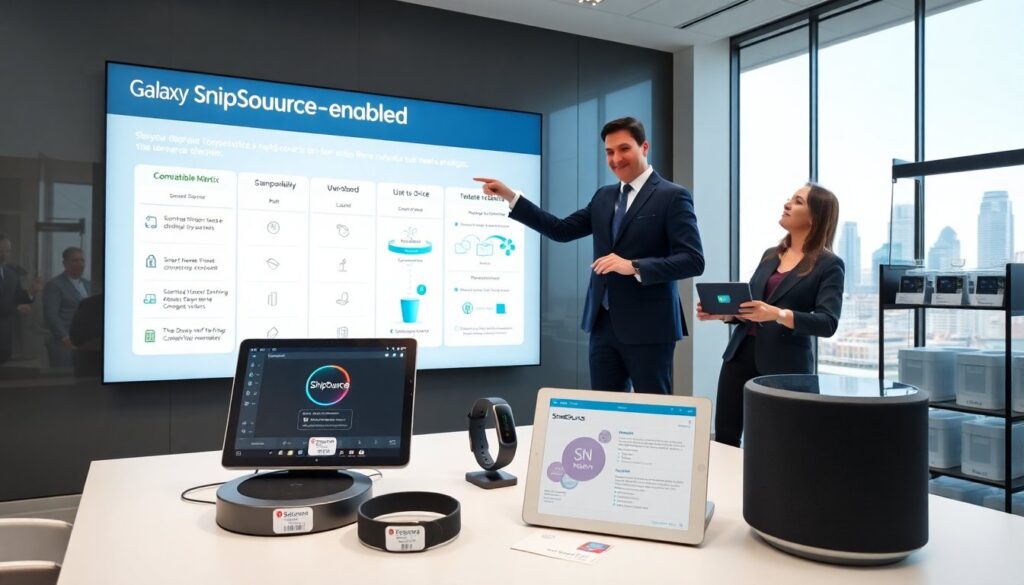
consumer electronics galaxy snipsource‚Äãzed drives device behavior and user choice in 2026. The platform links sensors, apps, and cloud services. It offers device makers a shared toolkit. It gives consumers clearer updates and smoother integrations. The article explains what the platform does, where shoppers see it, and how it handles data and compatibility.
Key Takeaways
- Galaxy SnipSource is a middleware platform that standardizes communication between consumer electronics, improving device behavior and user experience in 2026.
- The platform enables faster setup, smoother cross-device integration, and consistent firmware updates, benefiting smart home hubs, wearables, and audio devices.
- Consumers can identify SnipSource-enabled products by retailer badges indicating easier pairing and reliable updates, enhancing shopping confidence.
- Privacy is prioritized through anonymized telemetry, consent management, and on-device data aggregation, giving users control over their information.
- Buyers should compare brands’ use of Galaxy SnipSource for update control, data sharing, compatibility, and encryption to choose devices that match their preferences.
- The platform’s modular architecture and compatibility matrix help manufacturers and app developers deliver coordinated features while ensuring device interoperability.
What Galaxy SnipSource Is And Why It Matters To Consumers
Galaxy SnipSource is a middleware platform for consumer electronics. The platform standardizes communication between hardware and services. It reduces development time for makers and increases feature consistency for buyers. Shoppers notice the platform in firmware updates, setup flows, and cross-device features. The platform improves device discoverability in apps and voice assistants. It also lowers bug counts because many modules use the same code. Retailers can mark devices as SnipSource-enabled to signal smoother pairing and predictable updates. Analysts track the platform because it can speed new feature rollouts. Regulators watch its privacy tools because the platform often routes telemetry. Consumers who prefer predictable behavior view SnipSource-enabled products as safer bets. Buyers who value custom hacks may find the platform restrictive when it limits low-level access. Overall, the platform matters because it directly affects how devices work after purchase and how long they stay useful.
Key Consumer Electronics Powered By SnipSource And Real-World Use Cases
Manufacturers place the platform into smart home hubs, wearables, and audio devices. In smart homes, the platform coordinates lighting scenes, sensor triggers, and cloud routines. For example, a SnipSource hub links a door sensor to a camera and an alarm in one app. In wearables, the platform syncs health data across brands and pushes firmware that fixes measurement drift. A runner can get step corrections from a third-party app without manual pairing. In audio, the platform manages multi-room syncing and codec handoffs to keep playback aligned across speakers.
Real-world installers report faster setup times. Installers also report fewer app crashes after a platform-driven update. Service teams push fixes to many models at once using the platform. That reduces service calls and increases customer satisfaction. Retail staff use SnipSource badges to recommend devices that pair easily with popular phones and hubs.
Smart Home, Wearables, And Audio: Feature Comparisons And Buying Considerations
Buyers should compare how each brand uses the platform. Some brands allow full user control of updates. Other brands lock updates to maintain tested configurations. Shoppers who want manual control should choose brands that offer opt-out options. Shoppers who want simplicity should choose brands that automate updates. In wearables, compare how the platform shares health data. Some vendors limit third-party access. Other vendors permit wide exports to fitness platforms. In audio, compare latency and codec support. SnipSource-enabled speakers may handle codec negotiation automatically. Buyers should check compatibility lists and update policies before purchase. Buyers should also check whether the platform encrypts telemetry. Brands that document encryption offer clearer privacy signals. Finally, buyers should read recent update notes to see if the brand fixes issues quickly.
How SnipSource Works: Architecture, Privacy, And Compatibility
The platform uses a modular architecture with clear interfaces. Device firmware implements a small runtime. The runtime talks to local services with a defined API. The API maps sensors, controls, and storage to named capabilities. A cloud service coordinates updates, feature flags, and analytics. The platform pushes staged updates to reduce failure risk. It also supports rollbacks when an update breaks devices.
For privacy, the platform separates identifiers from data payloads. The platform anonymizes telemetry before it reaches analytics clusters. Brands control which fields they share. The platform enforces consent flags so apps only request allowed data. It also supports on-device aggregation so raw data does not leave a local gateway. Those features reduce data exposure in many deployments. Auditors can inspect update manifests and consent records when manufacturers publish them.
For compatibility, the platform publishes capability tables and conformance tests. Device makers run automated tests before they ship. App developers use a client library that handles discovery and pairing. The library exposes simple calls for actions like play, pause, and set brightness. Third-party integrations can register adapters that translate legacy protocols into platform capabilities. The platform maintains a compatibility matrix for popular phone models, hubs, and voice assistants. Consumers can check the matrix to confirm that a device will work with an existing setup. The platform updates the matrix as vendors certify new models.
In short, the platform combines a small device runtime, a cloud coordinator, and clear privacy controls. This design gives brands a way to deliver coordinated features while letting users retain control over their data and device choices.