
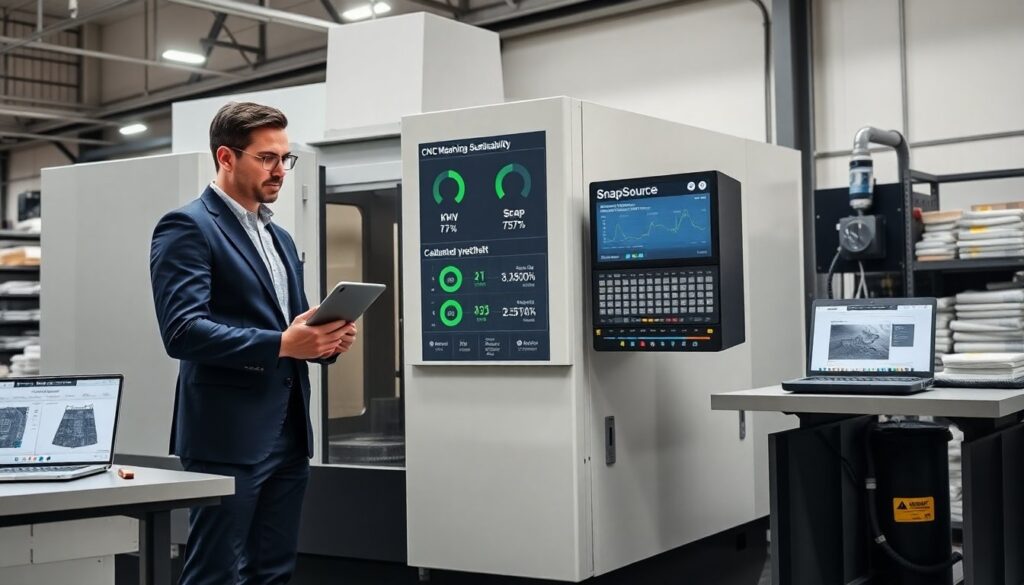
cnc machining sustainability snapsource is the guiding topic for this article. It explains clear steps for shops to cut waste, save energy, and lower cost. The article shows design tactics, machine practices, materials handling, and one SnapSource example. It uses direct language and short sentences. It gives usable actions that teams can apply immediately.
Key Takeaways
- CNC machining sustainability SnapSource emphasizes reducing waste and energy use to cut costs and environmental impact.
- Design and process strategies like near-net shapes and toolpath optimization minimize material waste effectively.
- Smart machine management, including monitoring spindle load and low-power modes, enhances energy efficiency.
- Selecting recyclable materials and long-life coolants supports sustainability goals and lowers disposal costs.
- Measuring metrics such as kWh per part and scrap rate helps track progress and justify improvements.
- The SnapSource digital quoting example demonstrates how technology reduces idle time, scrap, and lead times while improving material transparency.
The Sustainability Imperative For CNC Machining
Manufacturing emits energy and wastes material. Leaders set goals to reduce footprint and cost. They measure energy use, scrap rates, and coolant loss. Shops that track data find savings and faster cycle times. The phrase cnc machining sustainability snapsource highlights one vendor case and the larger trend. Teams that ignore efficiency face higher costs and supply risk. Buyers now ask for environmental data. Shops that report clear metrics gain new contracts and better margins.
Design And Process Strategies To Minimize Material Waste
Engineers simplify parts to cut machining time and scrap. They choose near-net shapes to reduce roughing passes. They specify proper tolerances only where needed. CAM programmers cluster parts to maximize stock use. They plan toolpaths that remove less material. They reuse common fixtures for multiple jobs. The practice supports cnc machining sustainability snapsource by lowering material demand and reducing rejects. Suppliers that offer design-for-manufacture checks reduce revisions and scrap.
Energy Efficiency And Smart Machine Management
Shops monitor spindle load and idle time. They set machines to low-power standby during gaps. They match cutting parameters to tool life and power draw. They prefer high-feed strategies that reduce time per part. They use variable-speed drives and modern servo tuning. Shops upgrade controls that support power-saving modes. All actions improve cost and emissions. The approach links directly to cnc machining sustainability snapsource when buyers value lower operational impact.
Materials, Coolants, And Recycling Best Practices
Shops select alloys with high yield and scrap value. They prefer materials that accept multiple regrind cycles. They track scrap by grade and source to enable resale. They choose coolants with long life and clear disposal rules. They set filtration targets to extend tool life. They partner with recyclers for swarf and mixed chips. These steps advance cnc machining sustainability snapsource goals by recovering material value and lowering disposal cost. Suppliers that share lifecycle data ease material choices.
Measuring Impact And Implementing Change: Metrics, Costs, And A SnapSource Example
Teams define simple metrics: kWh per part, scrap percent, coolant liters per shift, and tool cost per piece. They set baseline data for three months. They run trials on one cell and measure changes. They calculate payback for upgrades and process shifts. SnapSource provided one example where digital quoting cut idle time and reduced scrap. That vendor case showed lower lead times and clearer material reporting. The example supports cnc machining sustainability snapsource as a measurable program. Managers that use clear metrics fund more improvements and unlock steady savings.