
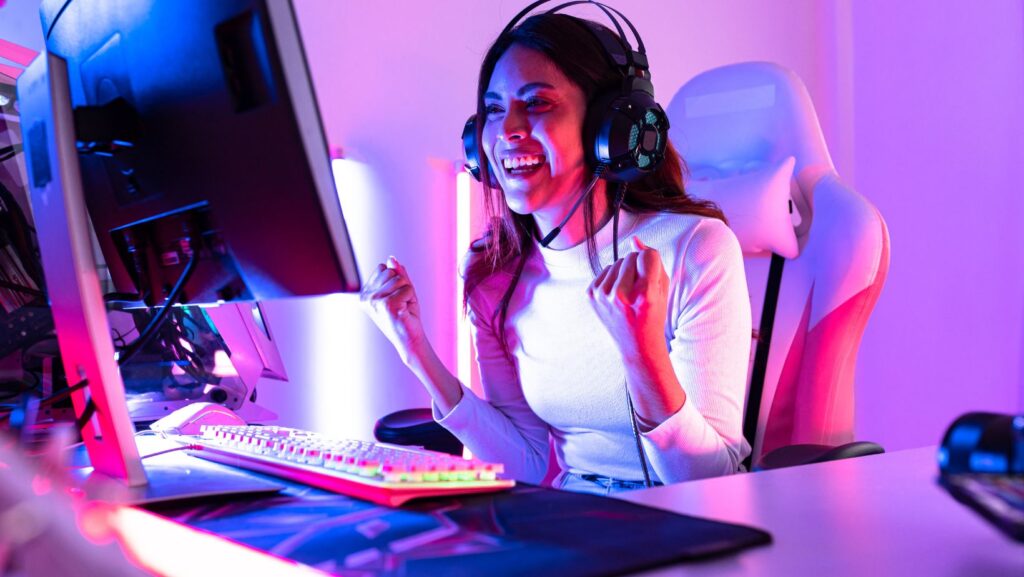
Online entertainment platforms are places where you can access fun and exciting content. Most platforms often offer personalisation features, autoplay, endless streams of content, and interactive features that you can use to communicate with friends or strangers. Platforms use algorithms to recommend content to you based on your viewing habits. This makes content discovery much easier and engaging. If you’re a content creator, platforms use features that allow you to communicate with your fans, further improving immersion.
The Evolution of Entertainment Consumption
Over the years, the way that you consume entertainment has shifted from traditional and scheduled media. Due to technological inventions, platforms were able to offer a more flexible experience, allowing you to access games, shows, or movies through your phone at anytime and from anywhere. This helps you take control of your entertainment experience, allowing you to explore more options.
Binge-Watching Culture and Content Availability
Bindge-watching refers to watching a single season within a couple of days, but most people also do it in one day. It’s mainly encouraged by the vast availability of content and different platforms. Many shows release a full season at once, compelling many to finish the season in a single sitting. Of course, many other shows prefer releasing one episode per week, but it’s more suitable for those who like anticipation.
The Rise of Interactive vs Passive Content
Unlike passive content, interactive content allows you to fully immerse and even engage with others on gaming platforms. Interactive platforms offer video games, live streaming, and virtual reality options to keep engagement high. As a result, you can participate in influencing outcomes and experiencing unique gameplay. This form of content consumption creates more immersive and personalised experiences. The impact that passive content has is highlighted in “Web’s Progression: Moving from Passive Content Consumption to Active Content Creation and Content Validation”.
Social Media, Live Streams, and Real-Time Engagement
You may already be familiar with social media apps, live streams, and real-time engagement. Social media platforms allow you to share moments like photos or videos with your friends and family. Streaming apps allow you to stream your favourite shows, games, or even songs in real-time. These real-time instances create a sense of community and participation, making you feel like a part of the online platform. With social media, you can keep up with your friends and family, while streaming apps will allow you to engage with content creators and fans.
The Role of Personalisation and Algorithms
Platforms use algorithms to create personalised experiences that are based on your preferences and what you watch on the platform. This is how it starts. The platform analyses your behaviour (e.g., viewing history, interactions) and recommends to you relevant movies, shows, music, or videos. Basically, these two tools make content consumption much faster and more engaging. This way, you’ll be able to explore content and stay engaged all the time. However, it also limits exposure to diverse content, so you are unable to explore more. Algorithms enhance convenience and satisfaction, but they influence what you see.
The Balance Between Personalisation and Privacy
Many platforms use personalisation to tailor content, but it can also clash with privacy. The process of recommending personalised content relies on research and analysis of your behaviour. However, this process requires platforms to collect and analyse your personal data, which may be shared with a third party and others. This raises concerns about the amount of data collected, as well as how it’s stored and shared.
The Emergence of Online Gaming Platforms in Entertainment Ecosystems
Online gaming platforms allow you to connect with friends and family members in real time. You can connect, collaborate, and share experiences through virtual communication. Many platforms use features like live streaming, in-game events, and virtual events to make communication possible. Thus, online gaming is a suitable form of entertainment for many. It impacts culture, communication, and content creation.
Gaming as a Core Entertainment Medium
Gaming has become a popular form of entertainment. Modern video games often cover immersive storytelling, high-quality graphics, and interactive experiences. Multiplayer modes and esports further improve the gaming space, offering social connection and competition with people from all over the world. Gaming is also available on mobile phones, so you can play at any time, from anywhere.
Platforms with Social and Competitive Features
Digital platforms have also expanded into gaming and betting environments. Platforms like Casino Days are examples of how online casinos create fully immersive gaming experiences by offering slots, table games, live dealer games, and more. Online casinos blend live dealer experiences, gamification, and personalisation to keep you immersed in unique gameplay.
Mobile-First Behaviour and On-the-Go Entertainment
Mobile-first behaviour refers to playing games on mobile phones. However, you can also use your phone to stream videos, play games, and browse social media. This makes entertainment more convenient and flexible, while instant engagement and accessibility are suitable for busy lifestyles. Thus, content creators and platforms create immersive experiences for on-the-go entertainment, emphasising portability, interactivity, and immediacy.
Short-Form Content and Instant Gratification Trends
Short-form content is highly popular, allowing you to enjoy short bursts of fun. Platforms support short videos, clips, and stories that you can access within seconds. This format encourages creativity, virality, and fast content sharing. However, it can also make you feel stressed and frustrated. Overall, short-form content presents a demand for fast, accessible, and shareable entertainment.
The Future of Digital Entertainment
Digital entertainment will create more immersive, interactive, and personalised experiences. With the help of VR, AR, and AI, platforms will encourage you to engage with stories and games. Streaming platforms, social media, and online gaming will further improve, delivering places where you can watch, play, and interact. Overall, the future of entertainment will create more connected, responsive, and user-centred experiences.
Why Entertainment Is Becoming More Interactive
Entertainment is becoming more interactive as players request engagement and personalised experiences. As a result, platforms create options that feel more immersive and connected. Additionally, with technology, entertainment allows you to become an active participant where you’ll be able to like, comment, and communicate freely within the digital space. Gaming, VR, and live streaming will also contribute to this by making content that’s more immersive and socially connected.